
Introduction: John the Apostle and His Legacy
John, the beloved disciple of Jesus, is the author of five New Testament books: the Gospel of John, three General Epistles (1, 2, and 3 John), and the book of Revelation. These writings were widely distributed and dated around 90–100 A.D., likely originating from Ephesus. John wrote to a church facing the spread of false teachings, especially distortions about the identity and mission of Jesus Christ. These epistles are not abstract theological dissertations—they are intensely practical, embodying applicable truth that calls for real-world obedience.
Distortions of the Gospel: Antichrist and False Teachings
1 John 2:18–19 (ESV)
“Children, it is the last hour, and as you have heard that antichrist is coming, so now many antichrists have come. Therefore we know that it is the last hour. They went out from us, but they were not of us; for if they had been of us, they would have continued with us. But they went out, that it might become plain that they all are not of us.”
1 John 2:22–24 (ESV)
“Who is the liar but he who denies that Jesus is the Christ? This is the antichrist, he who denies the Father and the Son. No one who denies the Son has the Father. Whoever confesses the Son has the Father also. Let what you heard from the beginning abide in you. If what you heard from the beginning abides in you, then you too will abide in the Son and in the Father.”
These verses stress the importance of holding firm to the original Gospel teaching. The “last hour” refers to the Church Age—these are the end times, not marked by calendar dates but by the spiritual battle over truth.
Christology: Jesus Is Fully God and Fully Man
1 John 4:1–6 (ESV)
“Beloved, do not believe every spirit, but test the spirits to see whether they are from God, for many false prophets have gone out into the world. By this you know the Spirit of God: every spirit that confesses that Jesus Christ has come in the flesh is from God, and every spirit that does not confess Jesus is not from God. This is the spirit of the antichrist…”
2 John 7 (ESV)
“For many deceivers have gone out into the world, those who do not confess the coming of Jesus Christ in the flesh. Such a one is the deceiver and the antichrist.”
To reject the physical incarnation of Jesus is to undermine the very nature of the Gospel. Jesus came fully human so that He could die as a substitute—echoing the “second Adam” theology and the arguments found in Hebrews. A human had to die for humanity.
Two Dominant Themes in the Epistles of John
1) Truth vs. Falsehood: Teaching Matters
John warns of deception—distortions that break down the truth about Jesus and salvation. These themes are consistent with other New Testament warnings:
Acts 20:29–30 (ESV)
“I know that after my departure fierce wolves will come in among you, not sparing the flock; and from among your own selves will arise men speaking twisted things, to draw away the disciples after them.”
2 Timothy 4:3–4 (ESV)
“For the time is coming when people will not endure sound teaching… and will turn away from listening to the truth and wander off into myths.”
2) Jesus’ Life and the Gospel: Sin and Love in Real Life
John emphasizes that truth is not academic—it leads to action. Sin matters. Love matters. Jesus’ life has direct, everyday implications.
1 John 3:16–17 (ESV)
“By this we know love, that he laid down his life for us, and we ought to lay down our lives for the brothers. But if anyone has the world’s goods and sees his brother in need, yet closes his heart against him, how does God’s love abide in him?”
1 John 2:5–6, 9 (ESV)
“…whoever keeps his word, in him truly the love of God is perfected. By this we may know that we are in him: whoever says he abides in him ought to walk in the same way in which he walked. …Whoever says he is in the light and hates his brother is still in darkness.”
John won’t allow Christian faith to remain in the theological realm. To know Jesus is to live like Jesus.
Christological Anchors: Word Made Flesh
John 1:1–4, 9–14 (ESV)
“In the beginning was the Word, and the Word was with God, and the Word was God. …In him was life, and the life was the light of men. …The true light, which gives light to everyone, was coming into the world. …And the Word became flesh and dwelt among us, and we have seen his glory…”
1 John 1:1–4 (ESV)
“That which was from the beginning, which we have heard, which we have seen with our eyes… and touched with our hands, concerning the word of life… that which we have seen and heard we proclaim also to you, so that you too may have fellowship with us.”
Belief is never separate from belonging. Right doctrine births deep community.
1 John 1:3 (ESV)
“…so that you too may have fellowship with us; and indeed our fellowship is with the Father and with his Son Jesus Christ.”
Result: Complete joy. Belief in Jesus brings us into fellowship—and from that fellowship comes joy.
Why Address This in the Letters? Gnosticism and Greek Dualism
The Greco-Roman world believed the spiritual was good, and the physical was evil. This dualism led to the Gnostic heresy: that Jesus couldn’t have come in the flesh. John confronts this head-on.
To deny Jesus’ humanity is to sever the cross from its power. If Christ wasn’t fully man, then He didn’t die as a man—and salvation collapses. Likewise, if we disconnect the person of Christ from ordinary life, we disconnect Christianity from real, physical living.
Some believed that what one did with the body didn’t matter—only the spirit. But John insists on integrity and wholeness between spirit and body. This is God’s design: not a schism but a unity of body, soul, and spirit, as originally intended before the Fall.
The Cross and the Restoration of Wholeness
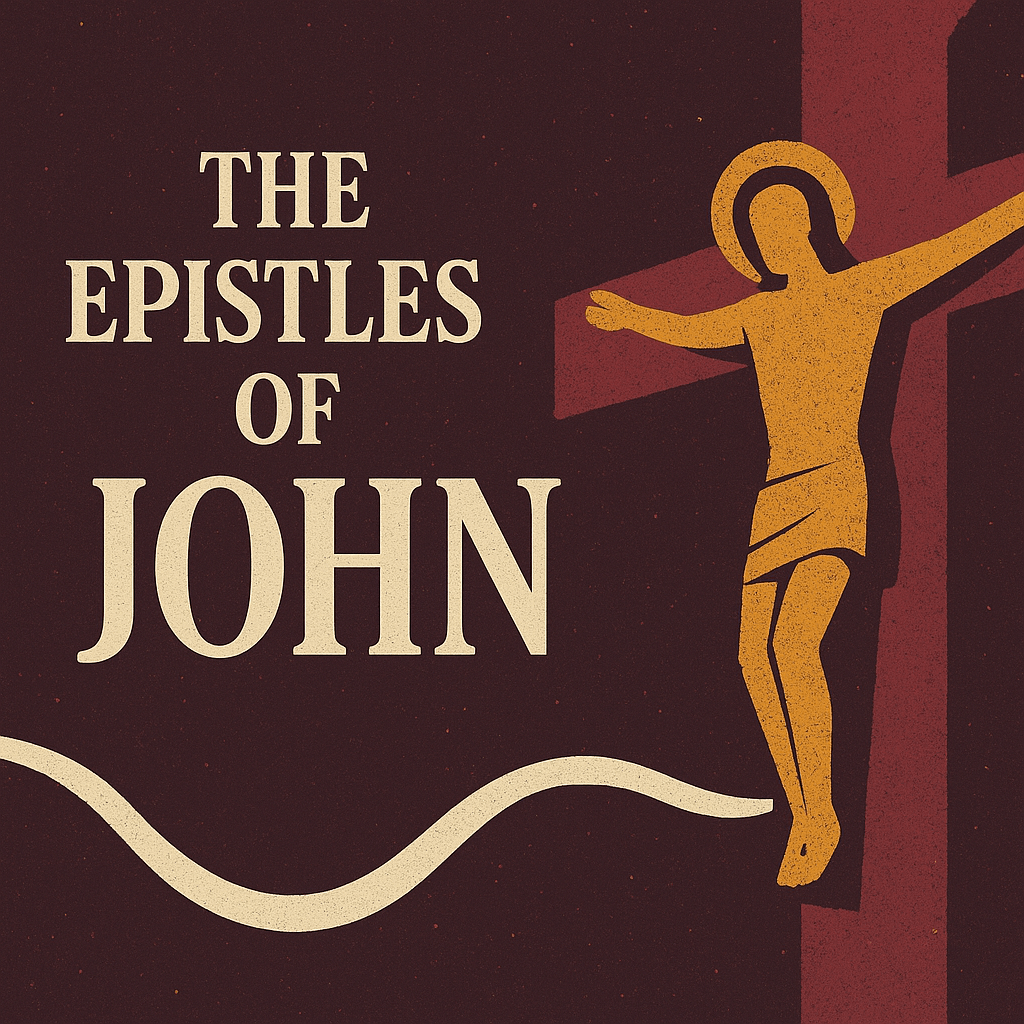
Scripture is unapologetic: the Cross is central. It alone can repair the breach between flesh and spirit, between heaven and earth. The Incarnation and crucifixion of Jesus restore what sin fractured.
The Bible affirms that the material world matters, and it is being redeemed through the blood of Jesus Christ. John’s letters declare this forcefully: we are called to live whole, holy lives in the here and now—not someday in a far-off heaven, but in the present world with eternal purpose.
 VoxNotas
Leave a comment