
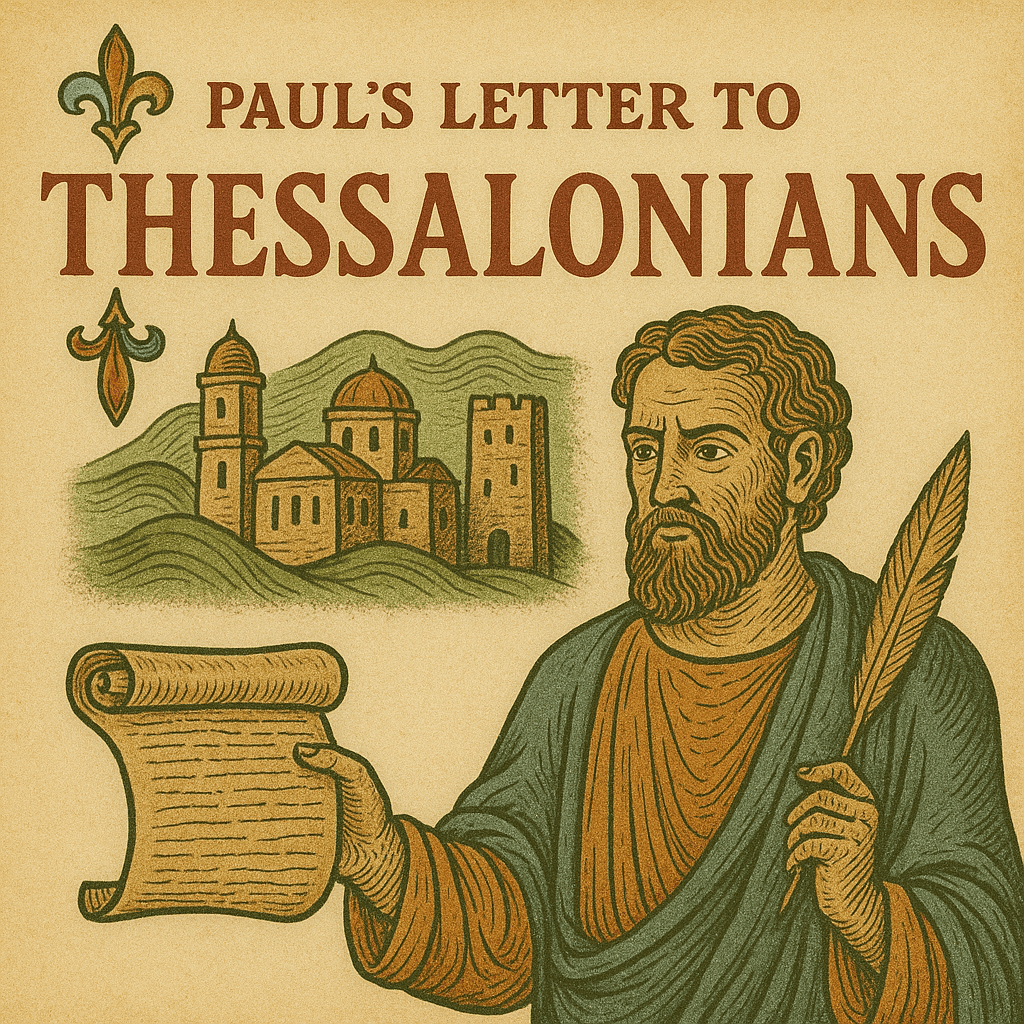
Led by Central Pastor Jake Rosekopf Vox Church
My Personal Class Notes-
1 Thessalonians
- Author: The Apostle Paul (with Silas and Timothy, 1 Thess. 1:1)
- Date: AD 50–51 – likely Paul’s earliest surviving letter
- Written From: Corinth, during Paul’s second missionary journey
- Audience: The young church in Thessalonica, a major port city in Macedonia (modern Greece)
- Founding of the Church:
- Recorded in Acts 17:1–9
- Paul preached for three Sabbaths before persecution forced him to flee
- He left quickly, leaving new believers under pressure and in need of guidance
Why 1 Thessalonians Was Written
Paul wrote this letter after Timothy returned with a report about the church (1 Thess. 3:6). It serves multiple purposes:
Summary of Purpose:
- Encourage persecuted believers to stand firm in faith
- Affirm their spiritual growth and love
- Clarify confusion about Christ’s return (Parousia)
- Reinforce godly living in light of their new identity in Christ
- Express Paul’s deep affection and longing to return to them
Timeline Placement in Acts
- Acts 17: Paul founds the church in Thessalonica
- Acts 18:5: While in Corinth, he receives news from Timothy and writes this letter
- So, 1 Thessalonians fits between Acts 17–18
Chapter-by-Chapter Breakdown with Verse Examples
Chapter 1 – A Model Church in a Hard Place
Key Verse: 1 Thess. 1:3 — “Remembering before our God and Father your work of faith and labor of love and steadfastness of hope in our Lord Jesus Christ.”
- Paul celebrates their faith, love, and hope
- They became examples to other believers despite affliction
- Their conversion from idols (v.9) is highlighted as genuine and bold
Commentary Insight: This church had no “backslide” phase—just passionate perseverance under pressure.
Chapter 2 – Paul’s Heart as a Spiritual Father
Key Verse: 1 Thess. 2:8 — “So, being affectionately desirous of you, we were ready to share with you not only the gospel of God but also our own selves, because you had become very dear to us.”
- Paul defends his motives against accusations
- Describes his ministry as gentle like a mother, and encouraging like a father
- Recounts his suffering and sacrifice for their sake
Commentary Insight: This is one of the most emotionally intimate chapters in Paul’s writings.
Chapter 3 – Timothy’s Report and Paul’s Joy
Key Verse: 1 Thess. 3:8 — “For now we live, if you are standing fast in the Lord.”
- Paul sends Timothy to check on them
- Timothy returns with good news of their faith
- Paul overflows with thanksgiving and prayer
Commentary Insight: Shows how deeply Paul’s joy was tied to the spiritual well-being of his people.
Chapter 4 – Holy Living and the Hope of Christ’s Return
Key Verses: 1 Thess. 4:16–17 — “For the Lord himself will descend from heaven with a cry of command, with the voice of an archangel, and with the sound of the trumpet of God. And the dead in Christ will rise first. Then we who are alive, who are left, will be caught up together with them in the clouds to meet the Lord in the air, and so we will always be with the Lord.”
- Call to sexual purity and loving one another more
- Addresses confusion about what happens to believers who die
- The rapture passage: believers caught up to meet Christ
Commentary Insight: Practical holiness and eschatology go hand-in-hand—live right because Christ is coming.
Chapter 5 – Living in the Light Until the Day of the Lord
Key Verse: 1 Thess. 5:6 — “So then let us not sleep, as others do, but let us keep awake and be sober.”
- The Day of the Lord will come like a thief in the night
- Be awake, sober, and protected by faith, love, and hope
- Ends with powerful rapid-fire commands (vv. 12–22)
- Final encouragement and blessing
Commentary Insight: Chapter 5 pushes urgency, balance, and preparedness—not panic but purposeful watchfulness.
Big Picture Summary:
1 Thessalonians encourages a young, suffering church to stay rooted in faith, live in holiness, love one another deeply, and stay ready for Christ’s return.
2 Thessalonians
- Author: The Apostle Paul (with Silvanus and Timothy, 2 Thess. 1:1)
- Date: Around AD 51, shortly after 1 Thessalonians
- Written From: Corinth, during Paul’s second missionary journey
- Audience: The church in Thessalonica, still enduring persecution and confusion
- Context:
- After receiving their first letter, confusion grew over the Day of the Lord
- Some believed they were already in the Tribulation
- Others had stopped working, expecting Christ’s immediate return
Why 2 Thessalonians Was Written
Summary of Purpose:
- Correct misunderstandings about the Day of the Lord (2 Thess. 2:1–2)
- Encourage perseverance amid persecution (2 Thess. 1:4–7)
- Warn against idleness and laziness (2 Thess. 3:6–12)
- Remind them to stand firm in apostolic teaching (2 Thess. 2:15)
- Reassure them that justice is coming—God will repay the wicked
Timeline Placement in Acts
- Acts 17: Paul plants the church in Thessalonica
- Acts 18: Paul is in Corinth, where he likely writes both 1 and 2 Thessalonians
- This letter fits between Acts 17–18, shortly after 1 Thessalonians
Chapter-by-Chapter Breakdown with Verse Examples
Chapter 1 – God’s Justice and Eternal Encouragement
Key Verses: 2 Thess. 1:6–7 — “Since indeed God considers it just to repay with affliction those who afflict you, and to grant relief to you who are afflicted as well as to us, when the Lord Jesus is revealed from heaven with his mighty angels.”
- Paul thanks God for their growing faith and love
- Reminds them that God will repay evil and relieve the righteous
- Describes Christ’s return in flaming fire to bring judgment and glory
Commentary Insight: Paul affirms that their suffering isn’t forgotten—God sees, and justice is coming.
Chapter 2 – The Man of Lawlessness and the Day of the Lord
Key Verse: 2 Thess. 2:3 — “Let no one deceive you in any way. For that day will not come, unless the rebellion comes first, and the man of lawlessness is revealed, the son of destruction.”
- Addresses fear that the Day of the Lord had already come
- Describes key events that must happen first:
- A great apostasy
- The rise of the man of lawlessness
- His temporary exaltation, then destruction by Christ
- Encourages them to stand firm in the gospel they received
Commentary Insight: This is one of Paul’s most prophetic passages, affirming a future Antichrist figure and God’s sovereign timeline. It’s meant to comfort, not scare.
Chapter 3 – Warning Against Idleness and Final Encouragement
Key Verse: 2 Thess. 3:10 — “For even when we were with you, we would give you this command: If anyone is not willing to work, let him not eat.”
- Paul rebukes those refusing to work under the false idea Christ’s return made labor unnecessary
- Commands discipline and sets his own example as a hard worker
- Ends with prayer for peace and grace
Commentary Insight: Spiritual urgency must be matched with daily faithfulness—Paul shows that healthy eschatology inspires diligent living, not escapism.
Big Picture Summary:
2 Thessalonians encourages believers to endure suffering, clarify confusion about Christ’s return, stand firm in truth, and live responsibly while awaiting the Lord.
 VoxNotas
Leave a comment