
Branford Campus Pastor Jake Rosekopf – Vox Church
My Notes-
Gehenna
Definition:
- Gehenna – A place of judgment, punishment, or destruction.
Gehenna in the Old Testament
- Gehenna is referenced in the Old Testament as a physical location.
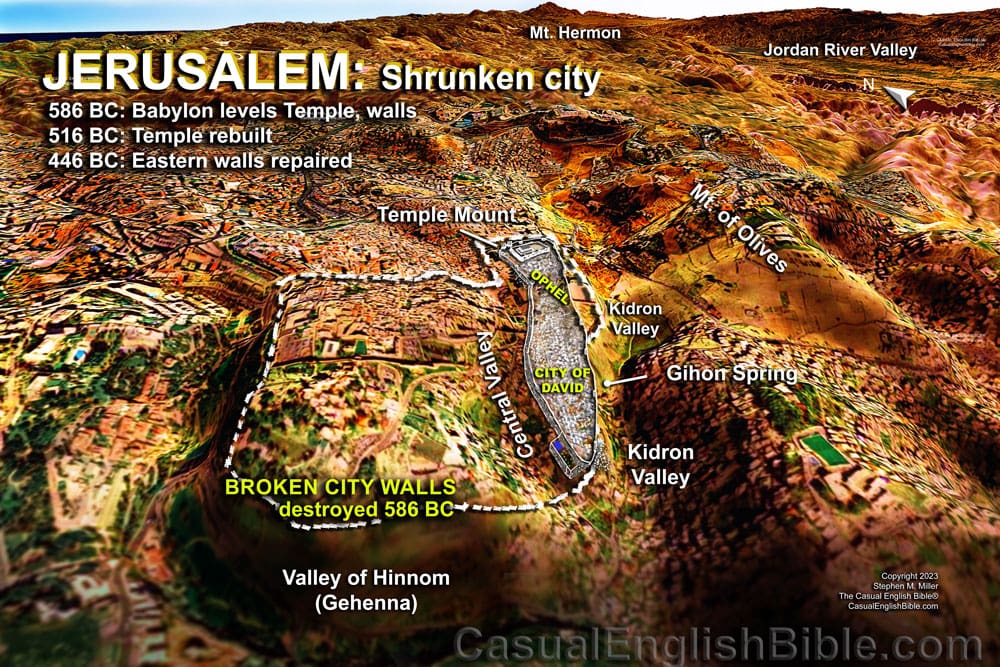
- The term originates from the Hebrew phrase “Ge Hinnom” (Valley of Hinnom), which refers to a valley located south of Jerusalem.
- The Valley of Hinnom was historically associated with:
- Child sacrifice to the pagan god Molech (a practice condemned by God).
- Fire and destruction as God’s judgment for these idolatrous practices.
Key Old Testament References
2 Chronicles 28:3 (NIV)
“He burned sacrifices in the Valley of Ben Hinnom and sacrificed his children in the fire, engaging in the detestable practices of the nations the Lord had driven out before the Israelites.”
Jeremiah 7:31–32 (NIV)
“They have built the high places of Topheth in the Valley of Ben Hinnom to burn their sons and daughters in the fire—something I did not command, nor did it enter my mind. So beware, the days are coming, declares the Lord, when people will no longer call it Topheth or the Valley of Ben Hinnom, but the Valley of Slaughter, for they will bury the dead in Topheth until there is no more room.”
Jeremiah 19:2–6 (NIV)
“Go out to the Valley of Ben Hinnom, near the entrance of the Potsherd Gate. There proclaim the words I tell you, and say, ‘Hear the word of the Lord, you kings of Judah and people of Jerusalem. This is what the Lord Almighty, the God of Israel, says: Listen! I am going to bring a disaster on this place that will make the ears of everyone who hears of it tingle. For they have forsaken me and made this a place of foreign gods; they have burned incense in it to gods that neither they nor their ancestors nor the kings of Judah ever knew, and they have filled this place with the blood of the innocent. They have built the high places of Baal to burn their children in the fire as offerings to Baal—something I did not command or mention, nor did it enter my mind. So beware, the days are coming, declares the Lord, when people will no longer call this place Topheth or the Valley of Ben Hinnom, but the Valley of Slaughter.’”
Gehenna in the New Testament
- In the New Testament, Gehenna is referenced as a metaphorical representation of Hell—a place of eternal punishment, destruction, and separation from God.
- The imagery of fire and judgment associated with Gehenna in the Old Testament is carried over into the New Testament to symbolize the final judgment and the fate of the wicked.
Key New Testament References
Matthew 5:22 (NIV)
“But I tell you that anyone who is angry with a brother or sister will be subject to judgment. Again, anyone who says to a brother or sister, ‘Raca,’ is answerable to the court. And anyone who says, ‘You fool!’ will be in danger of the fire of hell (Gehenna).”
Matthew 5:30 (NIV)
“And if your right hand causes you to stumble, cut it off and throw it away. It is better for you to lose one part of your body than for your whole body to go into hell (Gehenna).”
Matthew 10:28 (NIV)
“Do not be afraid of those who kill the body but cannot kill the soul. Rather, be afraid of the One who can destroy both soul and body in hell (Gehenna).”
Matthew 23:15 (NIV)
“Woe to you, teachers of the law and Pharisees, you hypocrites! You travel over land and sea to win a single convert, and when you have succeeded, you make them twice as much a child of hell (Gehenna) as you are.”
Luke 12:5 (NIV)
“But I will show you whom you should fear: Fear him who, after your body has been killed, has authority to throw you into hell (Gehenna). Yes, I tell you, fear him.”
2 Peter 3:9 (NIV)
“The Lord is not slow in keeping his promise, as some understand slowness. Instead he is patient with you, not wanting anyone to perish, but everyone to come to repentance.”
Theological Significance
- Jesus described hell (Gehenna) as a real place—not just a metaphor or symbol.
- In Scripture, hell is described as:
- A place of eternal separation from God.
- A place of fire and darkness where there is weeping and gnashing of teeth (Matthew 13:42).
- A place of conscious torment and everlasting punishment (Mark 9:43–48).
- Jesus mentions hell more often than heaven in the Gospels, emphasizing its reality and the seriousness of rejecting God’s offer of salvation.
- Gehenna serves as a powerful reminder of both God’s justice and God’s mercy, offering salvation through Christ to avoid eternal judgment.
Golgotha/Calvaria/Calvary
– The Place of the Skull
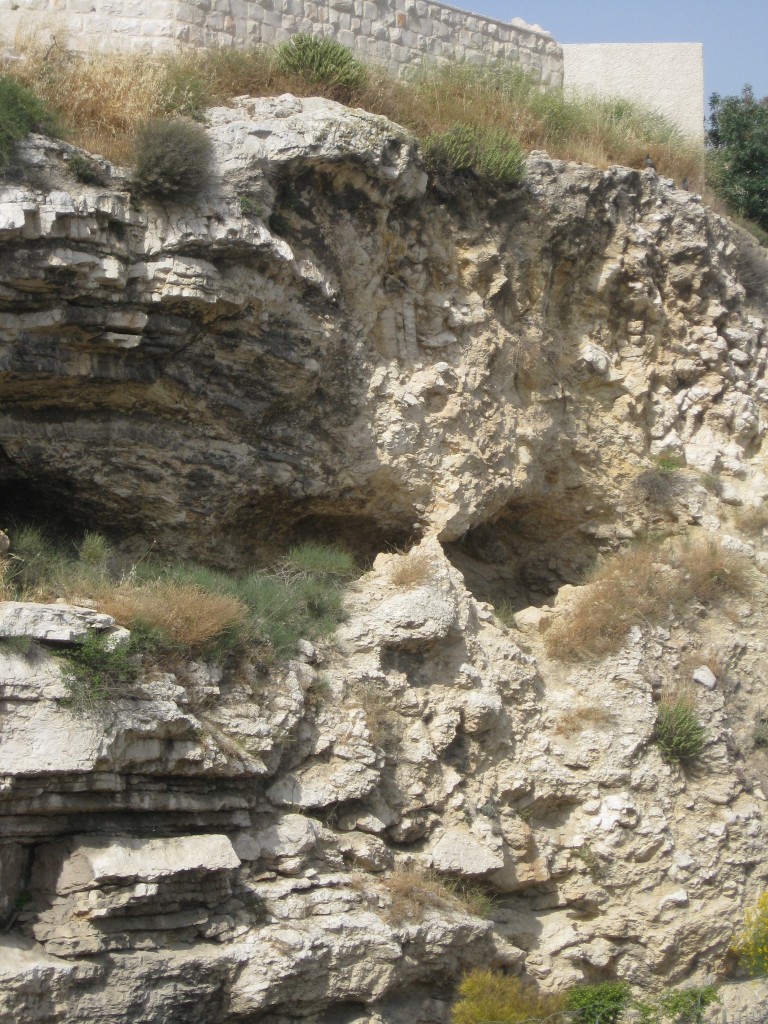
The term Golgotha (Hebrew), Calvaria (Latin), and Calvary (English) all refer to the same place: the site of Jesus’ crucifixion. The name “Golgotha” means “Place of the Skull,” which may refer to the appearance of the location or the grim association with death and executions.
Matthew 27:33 (NIV)
“They came to a place called Golgotha (which means ‘the place of the skull’).”
Mark 15:22 (NIV)
“They brought Jesus to the place called Golgotha (which means ‘the place of the skull’).”
Luke 23:33 (NIV)
“When they came to the place called the Skull, they crucified him there, along with the criminals—one on his right, the other on his left.”
John 19:17–18 (NIV)
“Carrying his own cross, he went out to the place of the Skull (which in Aramaic is called Golgotha). There they crucified him, and with him two others—one on each side and Jesus in the middle.”
John 19:20 (NIV)
“Many of the Jews read this sign, for the place where Jesus was crucified was near the city, and the sign was written in Aramaic, Latin and Greek.”
Hebrews 13:12 (NIV)
“And so Jesus also suffered outside the city gate to make the people holy through his own blood.”
Possible Locations of Jesus’ Crucifixion
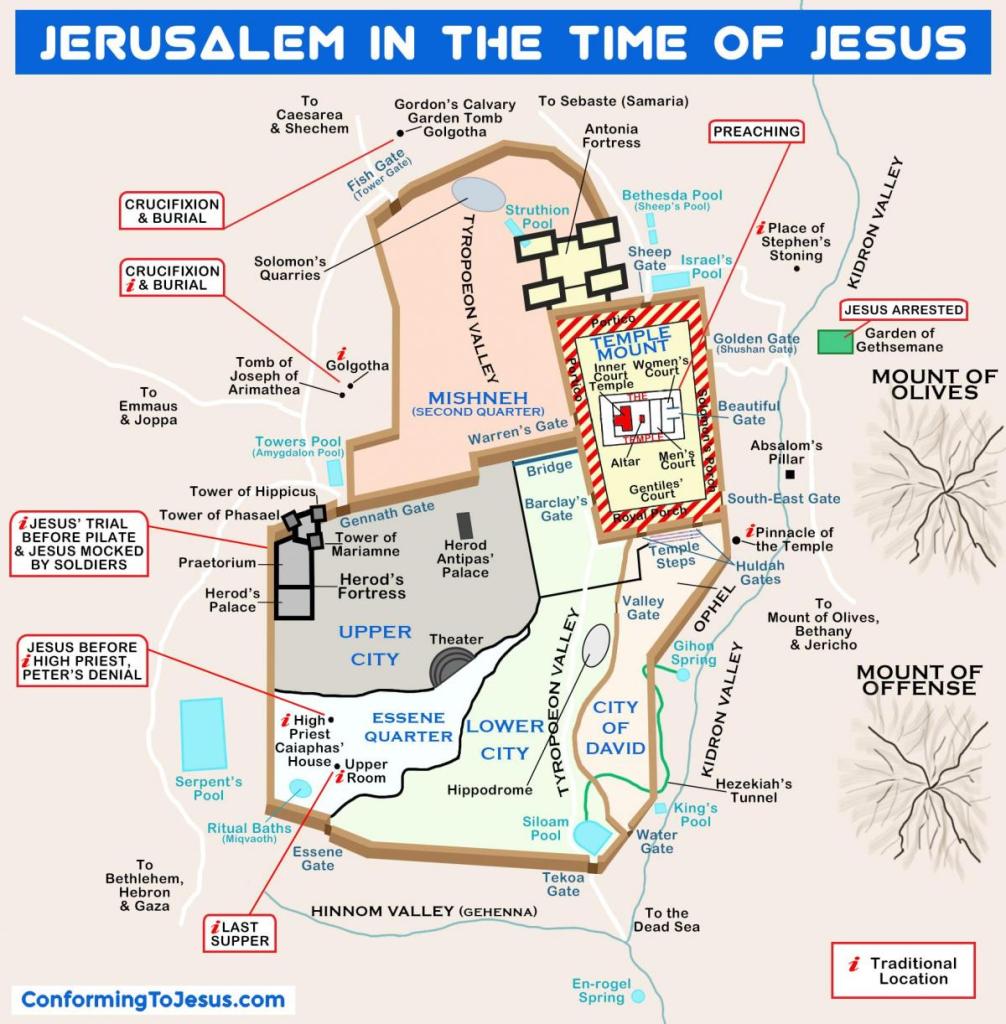
Proposed Location 1 – Church of the Holy Sepulchre (Most Accepted)
Argument 1: Oral Tradition
- Early Christian Tradition: The site has been revered since at least the 4th century, with oral traditions passed down by Christian communities, especially after Constantine’s mother, Helena, identified it as the location during her pilgrimage around 326 AD.
- Pilgrim Accounts: Early Christian pilgrims, like the Pilgrim of Bordeaux (circa 333 AD), mentioned visiting the site of the crucifixion, reinforcing the location’s significance.
- Eusebius (4th Century): The church was described by historian Eusebius as the place of the crucifixion, citing oral tradition and historical understanding.
- Pilgrim Testimonies: Writings from early pilgrims, such as Egeria, consistently confirm the church as the site of Jesus’ crucifixion.
Argument 2: Via Dolorosa
- The proposed path where Jesus carried His cross. Leads to the Church of the Holy Sepulchre.
- Church where Jesus fell.
Argument 3: Jewish Tombs from the First Century
- Located at the church (John 19:41).
Proposed Location 2 – General Charles Gordon Site (1883) – Disputed Location
In 1883, General Charles Gordon proposed an alternative location for the crucifixion site, which became known as Gordon’s Calvary. This location, situated outside the city walls of Jerusalem, is still debated among scholars, as it challenges the traditional location at the Church of the Holy Sepulchre.
Argument 1: It Looks Like a Skull
- One of the primary reasons Gordon advocated for this site is that a prominent rock formation at the location appears to resemble a skull, which aligns with the biblical name “Golgotha,” meaning “Place of the Skull.” This natural feature gave rise to the theory that this was the true location of Jesus’ crucifixion, as it visually fits the description given in the Gospels.
Argument 2: There is a Visible Garden Tomb That Fits the Gospel’s Description of the Tomb
- Near the skull-shaped rock formation, Gordon discovered a garden tomb, which many believe closely matches the description of Jesus’ burial place in the Gospels. The tomb is a large, hewn rock chamber with a rolling stone, resembling the burial practices of the time. Some scholars argue that this tomb fits the Gospel accounts of Jesus’ burial after His crucifixion, which might support the claim of this site being the actual location of the crucifixion and burial.
Argument 3: Jewish Tombs from the First Century
- Excavations at the site revealed the presence of first-century Jewish tombs, which is significant because it suggests the area was used for Jewish burials around the time of Jesus. This aligns with the Gospel accounts, which state that Jesus was buried in a tomb that was “new” and located near the site of His crucifixion (John 19:41-42). The presence of these tombs lends historical credibility to the idea that this site could be a plausible location for both the crucifixion and the burial.
Was Jesus Crucified on a Hill?
Yes:
- Golgotha was a Hill: The name “Golgotha,” meaning “Place of the Skull,” is commonly associated with a hill or elevated area. This fits with the historical understanding that crucifixions were often carried out on elevated places for greater visibility and to maximize the public spectacle.
- It Was the Most Exposed Place, Easier to See (Luke 23:49): Luke mentions that people “stood at a distance, watching these things.” The location of the crucifixion was likely chosen to be visible to the public, and a hill would make it easier for people to see from afar. The idea of crucifixion occurring on a hill is supported by the notion that it was a place where Jesus would be seen by both the crowds and those passing by.
- Early Christian Paintings and Sculptures: Early Christian art, particularly from the 3rd and 4th centuries, often depicts Jesus’ crucifixion on a hill, reinforcing the tradition that Golgotha was an elevated place. These visual representations were influential in solidifying the idea that the crucifixion took place on a hill.
No:
- Not Explicitly Stated in Scripture: While the term “Golgotha” suggests a place of elevation, the Bible does not explicitly state that it was a hill. The Gospels do not provide a clear geographical description of Golgotha’s topography, leading some to question whether the traditional interpretation is accurate.
- Roman Crucifixion Historically Took Place on Roads, with People Passing By (Matthew 27:39): Roman crucifixions were often performed on major roads, where the condemned were exposed to public view. Matthew 27:39 notes that people passing by mocked Jesus, suggesting that the crucifixion took place along a well-traveled route. This could imply that Jesus was not crucified on a hill but rather on a road or an open area near a busy thoroughfare.
Possible Roads:
- Amaus (Luke 24:13): The road to Emmaus, as described in Luke 24:13, is a journey Jesus’ disciples took after His resurrection. Some scholars suggest that this road could have passed near the crucifixion site, potentially indicating that Jesus’ crucifixion occurred near a road leading out of the city.
- Damascus (Acts 9): Similarly, the road to Damascus is an important route mentioned in the Bible, especially in relation to Paul’s conversion. Like the road to Emmaus, the Damascus road could have been a well-known route, raising the possibility that Jesus was crucified along a major road leading out of Jerusalem.
Both Gehenna and Golgotha were known for destruction, pain, and death, but at Golgotha, death was defeated.
Key Scriptures on Jesus’ Sacrifice:
- Romans 5:8 (NIV):
“But God demonstrates His own love for us in this: While we were still sinners, Christ died for us.” - Isaiah 53:5 (NIV):
“But He was pierced for our transgressions, He was crushed for our iniquities; the punishment that brought us peace was on Him, and by His wounds we are healed.” - 1 Peter 2:24 (NIV):
“He Himself bore our sins in His body on the cross, so that we might die to sins and live for righteousness; by His wounds you have been healed.” - Romans 3:22-25 (NIV):
“This righteousness is given through faith in Jesus Christ to all who believe. There is no difference between Jew and Gentile, for all have sinned and fall short of the glory of God, and all are justified freely by His grace through the redemption that came by Christ Jesus. God presented Christ as a sacrifice of atonement, through the shedding of His blood—to be received by faith. He did this to demonstrate His righteousness, because in His forbearance He had left the sins committed beforehand unpunished.” - 1 Corinthians 15:3-4 (NIV):
“For what I received I passed on to you as of first importance: that Christ died for our sins according to the Scriptures, that He was buried, that He was raised on the third day according to the Scriptures.”
 VoxNotas
Leave a comment