
Branford Campus Pastor Jake Rosekopf – Vox Church
My Notes-
Caesarea Philippi: A Place of Pagan Worship and Spiritual Conflict
Caesarea Philippi was originally named Panias after the Greek god Pan, who was worshipped in the city. Pan was the god of flocks, shepherds, and fertility. Worship of Pan involved disturbing rituals, including sexual acts (even involving animals) and human sacrifice.
In 20 BC, Caesar Augustus granted the city to Herod the Great. After Herod’s death, the city passed to Philip the Tetrarch, who renamed it Caesarea Philippi to honor Caesar.
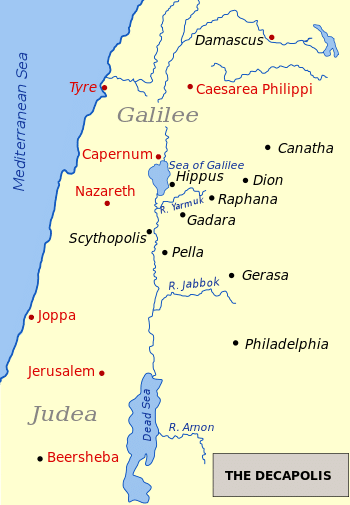
The city was located at the foothills of Mount Hermon — a tall mountain rising over 9,000 feet — about 15 miles north of the Sea of Galilee. A natural spring flowed out from beneath Caesarea Philippi, feeding the Jordan River. The Jordan flows into the Sea of Galilee and eventually empties into the Dead Sea.
The Temple of Pan was built over this spring because the people believed it represented fertility. They practiced rituals to “coax” the gods out of the underworld during winter, including sexual acts and human sacrifice. If a sacrificed person’s blood flowed back into the spring, the sacrifice was rejected — but if no blood appeared, the sacrifice was accepted.
The cave at the entrance of the temple was believed to be the Gates of Hades — the entrance to the underworld. Because of the extreme pagan activity, the Jews avoided the entire area.
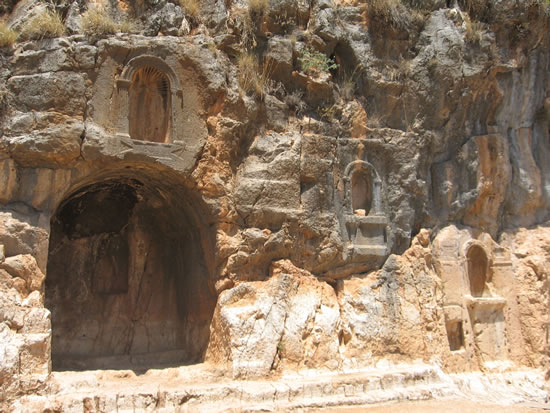
In Matthew 16:13–21, Jesus references Hades — a temporary holding place for unbelievers as they await final judgment — while standing near this very location. His words carried weight, directly challenging the dark spiritual symbolism of the area.
“Upon This Rock” – The Power and Promise of the Church
“Now I say to you that you are Peter (which means ‘rock’), and upon this rock I will build my church, and all the powers of hell will not conquer it.” — Matthew 16:18 (NLT)
This is the first time Jesus speaks about the church — which means “called-out assembly.” Jesus introduces the concept of His Church — a Church that He alone will build, and nothing, not even the forces of hell, will be able to stop it.
The Gates of Hell Will Not Prevail
- The Church is on the Attack – The gates of hell are defensive structures. Jesus declares that His Church will be on the offensive, advancing against the powers of darkness.
- The Enemy Will Never Overcome the Church – No attack from the enemy can overpower the Church that Jesus is building.
- Death Has No Victory Over the Church – When Jesus rose from the dead, He shattered the gates of hell and stripped death of its power (Revelation 1:18).
Weapons of Truth
- The Church is Built BY Jesus – “And God placed all things under his feet and appointed him to be head over everything for the church, which is his body.”
→ Ephesians 1:22–23 - The Church is Built ON Jesus – “Built on the foundation of the apostles and prophets, with Christ Jesus himself as the chief cornerstone.”
→ Ephesians 2:20 - The Church Wins BECAUSE of Jesus – “Where, O death, is your victory? Where, O death, is your sting? Thanks be to God! He gives us the victory through our Lord Jesus Christ.”
→ 1 Corinthians 15:55–57 - The Church Points the Lost TO Jesus – “Through the gospel, the Gentiles are heirs together with Israel, members together of one body, and sharers together in the promise in Christ Jesus.”
→ Ephesians 3:6–12
We Are Invited to Build With Him
We don’t build the Church — Jesus does. But we are invited to be part of its construction, with Christ as the foundation and cornerstone. The Church is not sustained by human effort; it stands on the unshakable power and authority of Jesus.
 VoxNotas
Leave a comment