
Lead by Pastor Josh
My Notes-
ACT 3 – The King Chooses Israel: Redemption Initiated
Books:
Joshua, Judges
Archetypes: Seeing the person of Jesus
How Do People Live Out the Promise?
- God will save His people and establish them.
- How do they inhabit the Promised Land?
- God continues His covenant with Moses through Joshua.
- Moses dies and does not enter the Promised Land, but the covenant remains.
Joshua – A Type of Christ
Joshua’s life foreshadows the leadership and deliverance of Jesus.
Joshua’s Background and Early Role
- Born in Egypt before the Exodus (~1037 BC), around the time Moses fled to Midian.
- About 40 years old during the plagues and the Exodus.
- Joshua and Caleb were among the twelve spies sent into the Promised Land—only they gave a faithful report (Numbers 14).
- Joshua was a glorious commander who led the Israelites to victory over the Amalekites (Exodus 17).
- The last to see Moses before he ascended the mountain and the first to see him return (Exodus 24).
Appointed Successor
- Joshua was appointed as Moses’ successor (Deuteronomy 34:9).
- Took leadership at 85 years old.
- Sent spies into Jericho (Joshua 2).
Encounter with the Angel of the Lord
- Before the battle of Jericho, Joshua encountered the Angel of the Lord (Joshua 5:13–15).
- Told to remove his sandals because he was standing on holy ground—a direct parallel to Moses at the burning bush.
Conquest of the Promised Land
- Joshua led the Israelites to march around Jericho until the walls fell (Joshua 6).
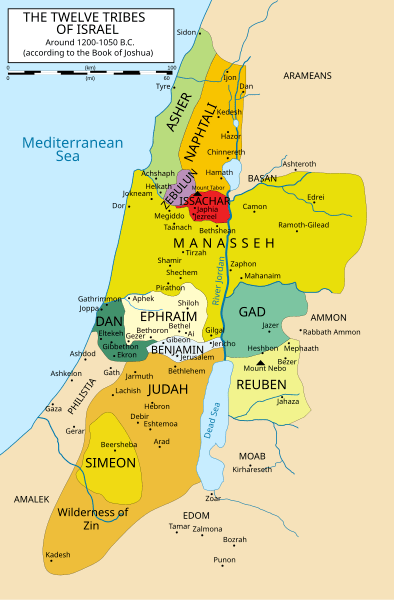
- Oversaw the conquest of Canaan and the division of the land among the twelve tribes.
- The Levites, as priests, received no land inheritance—their inheritance was their calling (Numbers 18:20–24).
- Manasseh received two territories (as part of the tribe of Joseph).
- The Levites were dispersed throughout the territories to serve as spiritual leaders.
Challenges After the Conquest
- The tribes experienced varying levels of success driving out the Canaanites.
- Mixed cultures and religions became a recurring source of temptation and compromise.
Joshua as a Type of Christ
Joshua’s leadership points forward to Jesus:
| Joshua | Jesus |
|---|---|
| Led the people into the Promised Land | Leads believers into the Kingdom of God |
| Conquered physical enemies | Conquers sin and death |
| Divided the land as an inheritance | Provides an eternal inheritance in heaven |
| Appointed by God to lead Israel | Anointed by God to rule as King |
Joshua’s Final Charge
Joshua 24 – Joshua’s final words to Israel:
“Now therefore fear the Lord and serve him in sincerity and in faithfulness. Put away the gods that your fathers served beyond the River and in Egypt, and serve the Lord. And if it is evil in your eyes to serve the Lord, choose this day whom you will serve… But as for me and my house, we will serve the Lord.” (Joshua 24:14–15)
- Joshua’s challenge was a call to covenant faithfulness.
- After Joshua’s death, the people quickly turned to idolatry.
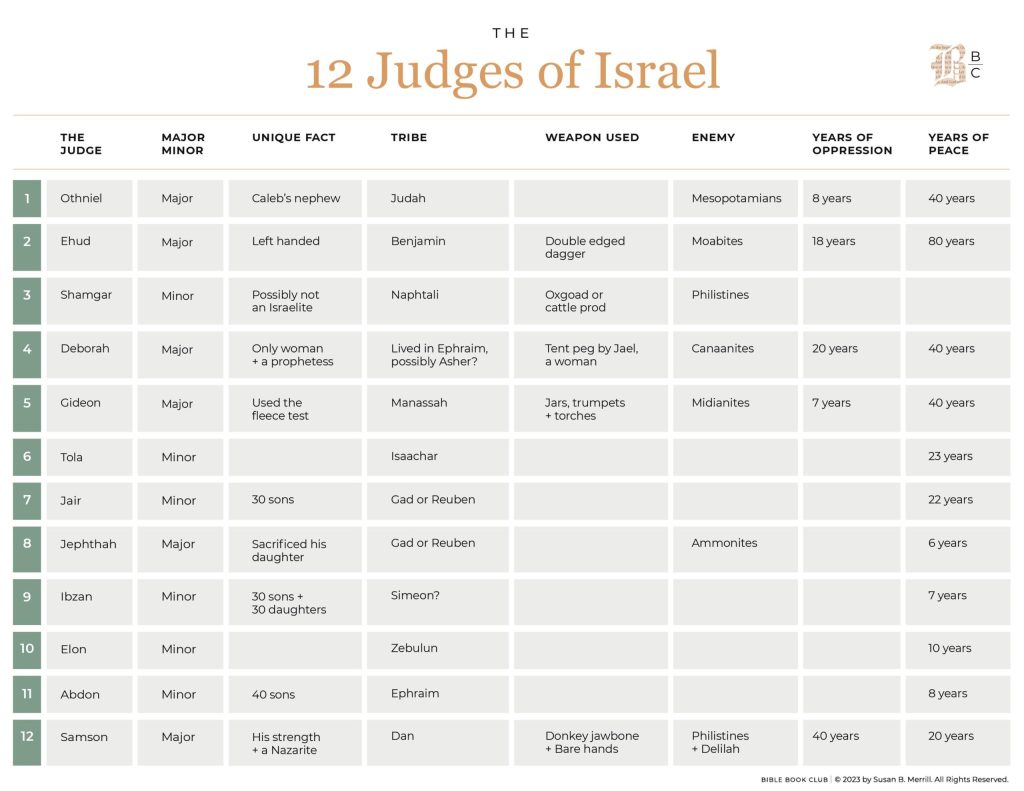
The Era of the Judges
Judges reveals a tragic pattern of spiritual failure and God’s persistent grace.
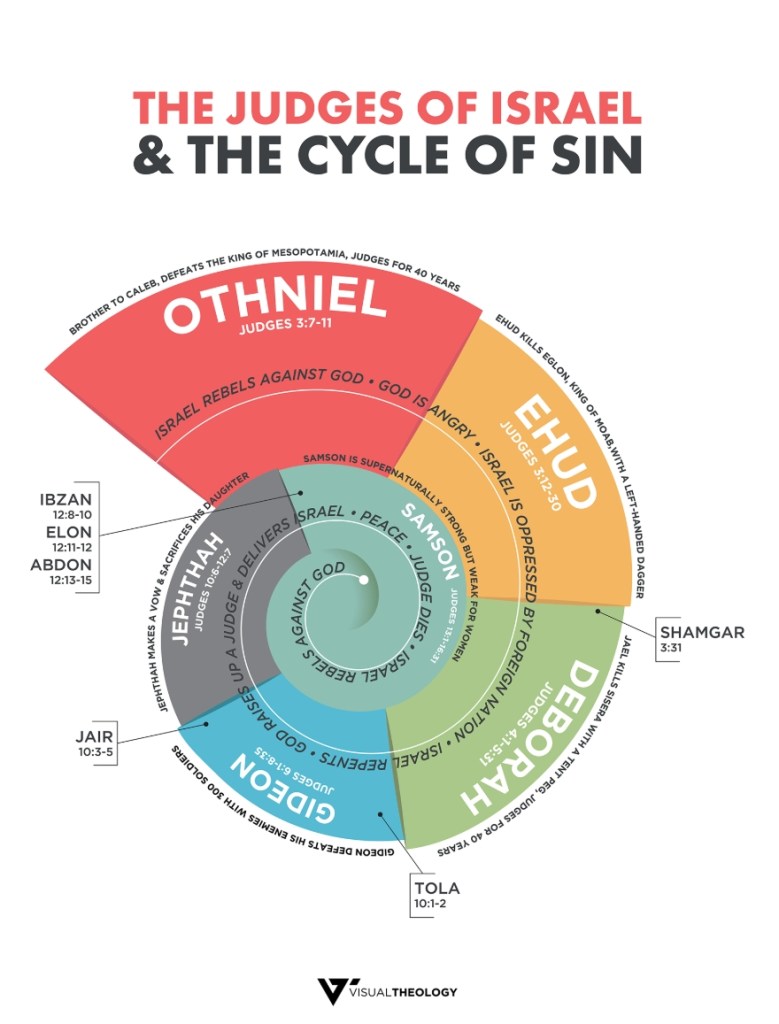
The Cycle of Judges
- Sin – Israel falls into idolatry and sin.
- Judgment – God allows Israel’s enemies to oppress them.
- Repentance – The people cry out to God for deliverance.
- Deliverance – God raises up a judge to save them.
- Peace – The people serve God for a time—before falling back into sin.
Baal and the Cultural Influence
- Baal was a fertility god, symbolizing the cultural pull toward agriculture and economic success.
- Israel was transitioning from the provision of daily manna in the wilderness to life in an agrarian society.
- The temptation to turn to Baal for fertility and prosperity was strong.
Israel’s Failure to Trust God
- The Israelites struggled to maintain faith in God’s provision.
- They repeatedly turned to false gods and mixed religious practices.
- The failure to drive out the Canaanites fully led to cultural and spiritual compromise.
How the Cycle of Judges Reflects Our Lives
Israel’s pattern in Judges mirrors the personal and collective struggle with sin:
- We fall into sin.
- We experience the consequences.
- We cry out to God.
- God delivers us.
- We serve God with gratitude—until the next fall.
The Meta-Narrative
The pattern of sin, judgment, repentance, and deliverance points to the need for a final and perfect Judge: Jesus Christ.
- The judges could only provide temporary relief.
- Israel needed a faithful and eternal king.
- Jesus fulfills the role of both Judge and King.
Why Israel Needed a King
- Judges highlights the need for stable leadership.
- Without a king, Israel repeatedly turned to idolatry and rebellion.
- The monarchy was established under God’s permissive will as a response to Israel’s failure to trust in God’s leadership.
Key Theological Themes
- God’s Faithfulness – Despite Israel’s sin, God remained faithful to His covenant.
- Human Weakness – Israel’s inability to remain faithful points to humanity’s need for a perfect mediator.
- God’s Sovereignty – God’s plan unfolds through flawed human leadership.
- Foreshadowing of Christ – Joshua, the judges, and the kings all point to Jesus as the ultimate fulfillment of God’s promises.
Joshua and Judges Point to Jesus
- Joshua’s leadership prefigures Jesus as the leader who brings His people into the eternal kingdom.
- The judges reveal the people’s need for a Savior who could deliver them fully and finally from sin.
- Jesus is the true and final Judge who brings eternal peace and salvation.
 VoxNotas
Leave a comment